
Quick Summary
Key Features
- Disposable virtual cards
- 30+ currencies
- Budgeting tools
- Free Standard plan
Main Advantages
- Free virtual card issuance
- Multi-region availability (5 regions)
Notable Limitations
- Terms change often — the provider's live numbers are final
The cards
Every format Revolut issues — pick the one that fits how you spend.
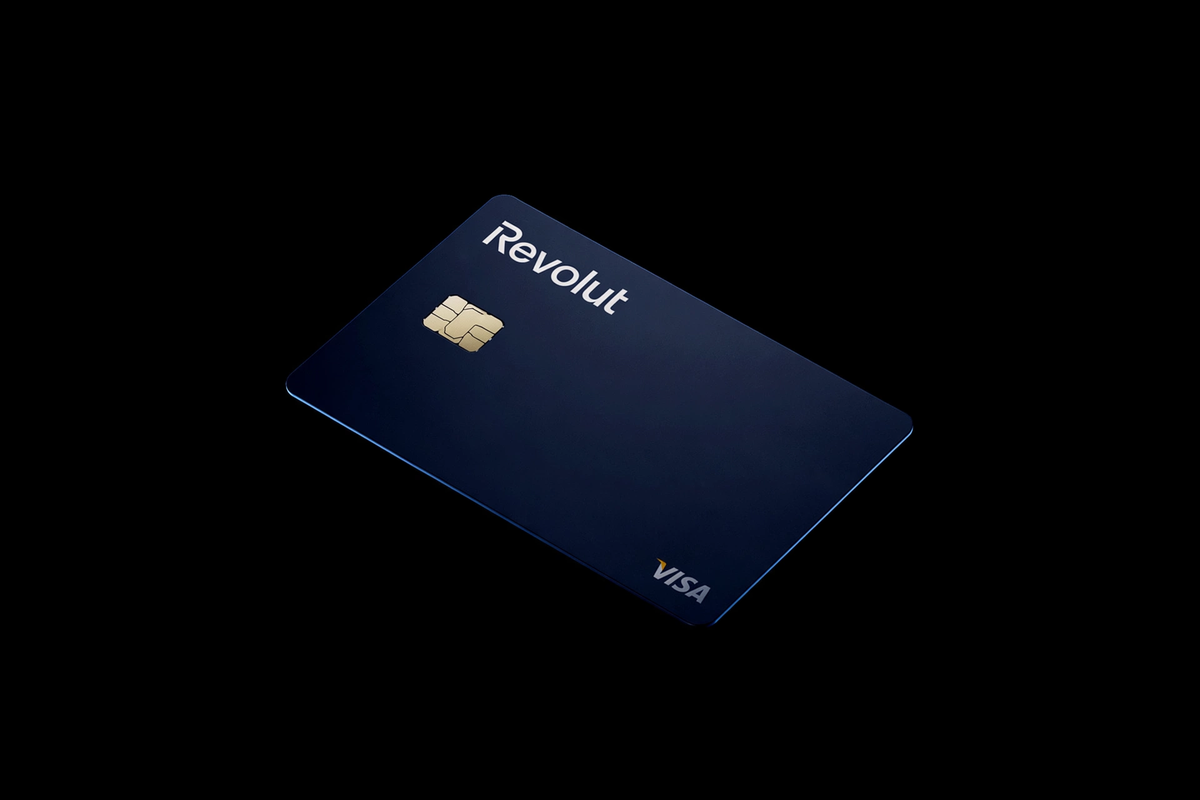
1Can I get this card?
Supported Countries Map — powered by our availability data.
Revolut: Reported in 56 countries across 5 regions (United States, United Kingdom, Europe, Asia-Pacific, Latin America).
Coverage reported by the provider — the exact applicant list is confirmed in-app.
2What does it cost?
Every fee we could verify for the Revolut card.
Fees verified October 13, 2026 from public web sources. Fees change often — always confirm the app's live numbers before signing up. This page is for information only, not financial advice.
| Fee | Revolut |
|---|---|
| Issuance fee | $0 |
| Monthly fee | $0 |
| FX fee | Varies by region — confirm in-app |
3What do I get?
Perks, rewards and capabilities that come with the card.
| Category | Benefit |
|---|---|
| Card options | Disposable virtual cards |
| Spending & FX | 30+ currencies |
| Perks | Budgeting tools |
| Perks | Free Standard plan |
4What do they need from me?
What you will have to provide or meet to get and use the card.
| Requirement | What it means |
|---|---|
| Identity check | ID verification required — verify your identity in the app before ordering |
| Funding | You will need a way to load the card: bank transfer, debit card, Apple Pay, Google Pay |
| Age | You must be 18 or older to apply |
What is Revolut?
Revolut is a global fintech that has grown into a full digital bank alternative, offering accounts, cards, currency exchange, budgeting tools, and investing from a single app. Its virtual cards are a standout feature: every user — including those on the free Standard plan — can generate virtual debit cards instantly, including disposable single-use numbers that are perfect for trials and unfamiliar checkouts. For online spenders who want bank-grade features without bank fees, Revolut is the most feature-rich option in the virtual card space.
The card draws from your Revolut balances across 30+ currencies. Pay in the local currency where you hold it and there is no conversion at all; let Revolut convert and you get its weekday rate with a generous free allowance. Like Wise, it is debit-only: you spend your own money, which keeps costs visible and eliminates interest charges.
Card types offered
Revolut offers three card formats. Standard virtual cards are reusable numbers for subscriptions and regular online spending — you can create several and label them (streaming, ads, shopping), freezing each independently. Disposable virtual cards generate a new number for every transaction, which is the strongest protection against card-number theft: even if a merchant is breached, the number is already dead. Physical debit cards come free on the Standard plan as your first card, though delivery fees apply; Premium and Metal plans add perks like higher free ATM limits and travel insurance.
Fees explained
Card issuance: virtual cards are free on all plans, including Standard at $0/month. Your first physical card is free (plus delivery); replacements and extra cards may carry fees on lower plans. The free FX allowance is the headline: US Standard users convert up to $5,000 per month at no markup on weekdays. Above the allowance, a 1% fair-usage fee applies, and exchanges on weekends carry a 1% surcharge to cover market risk — so a $500 weekend conversion costs about $5 extra.
Monthly fees: Standard is $0. Premium ($9.99/mo in the US) raises limits, adds travel insurance, and higher interest on savings. Metal ($16.99/mo) adds higher cashback-style perks, unlimited fee-free FX in many cases, and a metal physical card. Top-ups by bank transfer are free; card top-ups are generally free within limits but can incur fees depending on region and card type. ATM withdrawals are free up to a monthly limit per plan, then charged.
How to get a Revolut card
- Download Revolut and sign up with your phone number and email, choosing your country of residence.
- Verify your identity with a government ID and selfie — approval usually takes minutes.
- Open the Cards tab and tap to add a virtual card. It is ready to use instantly with its full card number, expiry, and CVV.
- Top up with a bank transfer or linked card, then add funds to the currency balances you plan to spend.
- Generate extras — create a disposable virtual card for one-off purchases or label virtual cards per use case (ads, subscriptions).
Top-up methods
Bank transfers are free and the best way to fund larger amounts; Revolut provides local account details in supported currencies. Debit and credit card top-ups are instant and generally free within your plan's limits, though fees can apply in some regions or for credit cards. Apple Pay and Google Pay top-ups are supported in many markets. Crypto top-ups exist inside Revolut's ecosystem (you can hold crypto in the app), but funding the card balance from external crypto wallets is not a direct feature — this is a fiat-first platform.
Availability
Revolut is available in the US, UK, EU/EEA, Singapore, Australia, and a growing list of other markets, with 30+ currencies supported for holding and spending. Exact features — including which card types ship and which top-up methods work — vary by country, and some regions are still in a limited rollout. Check the app after selecting your country of residence.
Security and card controls
Revolut's disposable virtual cards are its killer security feature: a fresh number for every transaction means a breached merchant gets nothing usable. Reusable virtual cards can be frozen, unfrozen, and deleted independently, and you can set per-card spending limits and toggle online, ATM, and contactless use. Location-based security flags transactions far from your phone, and instant push notifications for every charge make fraud easy to spot. As a licensed bank or e-money institution depending on the market, Revolut holds customer funds under the relevant safeguarding or deposit-protection rules.
How Revolut compares on price
For moderate spenders, Revolut's free plan is hard to beat: $5,000 a month of free weekday FX covers most freelancers, travelers, and ad buyers, and the virtual cards themselves cost nothing. Heavy converters should do the math against Wise — once you exceed the free allowance and add the 1% surcharge, Wise's flat ~0.26%+ fee structure wins for large volumes. Against Payoneer (up to 3.5% FX) or regional wallets (3–6%), Revolut is far cheaper either way. The real cost traps are behavioral: converting on weekends, or paying the Premium/Metal subscription when the free tier already covers your needs.
Revolut for freelancers and remote workers
Freelancers paid in dollars or euros while spending in another currency get a lot from Revolut: invoice in USD, hold the balance, and spend locally with the free FX allowance instead of losing 3% to a bank conversion. Labeled virtual cards keep business subscriptions separate from personal spending, and the built-in budgeting analytics categorize it all automatically. The paid tiers start making sense when your monthly FX volume consistently exceeds $5,000 — at that point the subscription costs less than the 1% fair-usage fee. Pair a weekday conversion habit with a dedicated virtual card for client expenses and Revolut effectively replaces a business bank account for many solo operators.
Getting the most from the free plan
Three habits keep Revolut free: convert currencies on weekdays to dodge the 1% weekend surcharge, stay inside the $5,000 monthly FX allowance by pre-funding the currencies you spend most, and use bank transfers instead of card top-ups for large amounts. Turn on instant transaction notifications and a weekly spending digest, and review the plan comparison page once your volume grows — upgrading only pays for itself when your fair-usage fees would exceed the subscription price.
Limits and things to watch
The free plan's limits are the main friction: ATM withdrawals, top-ups, and FX all have monthly caps, and exceeding them triggers fees that can surprise you if you do not track them. The weekend FX surcharge is easy to forget — schedule large conversions for weekdays. Account freezes for compliance reviews are a known complaint across fintechs, and Revolut is no exception: keep your ID current and be ready to document large or unusual transfers. Finally, disposable cards are brilliant for one-off purchases but impractical for subscriptions and ad accounts that rebill the same number — use a labeled reusable virtual card for those.
Who should use Revolut?
Revolut suits people who want everything in one app: a free virtual card, a generous $5,000/month free FX allowance, disposable card numbers for security, and budgeting tools on top. It beats Wise on features and free-plan generosity, while Wise still wins on raw conversion pricing for very large volumes. Watch out for the weekend surcharge — schedule big conversions for weekdays — and note that free-plan limits on ATM withdrawals and top-ups can pinch heavy users, which is what the paid tiers exist to fix.
Pros
- Free virtual cards on the $0 Standard plan
- Free FX up to $5,000/month on weekdays (US)
- Disposable single-use virtual cards for maximum security
- Full banking features: 30+ currencies, budgeting, investing
- First physical card free (delivery fee applies)
Cons
- 1% weekend FX surcharge
- 1% fee above the free FX allowance
- Free-plan limits on ATMs and top-ups
- Availability and features vary by country
Card specs
| Feature | Revolut |
|---|---|
| Virtual card issuance | $0 |
| Monthly / annual fee | $0 |
| Card network | Visa / Mastercard |
| Card type | Virtual |
| KYC | ID verification required |
| Top-up methods | bank transfer, debit card, Apple Pay, Google Pay |
| Supported assets | — |
| Regions | United States, United Kingdom, Europe, Asia-Pacific, Latin America |
Rating breakdown
Pros & cons
Pros
- Free virtual cards on the $0 Standard plan
- Free FX up to $5,000/month on weekdays (US)
- Disposable single-use virtual cards for maximum security
- Full banking features: 30+ currencies, budgeting, investing
- First physical card free (delivery fee applies)
Cons
- 1% weekend FX surcharge
- 1% fee above the free FX allowance
- Free-plan limits on ATMs and top-ups
- Availability and features vary by country
Frequently asked questions
Is the Revolut virtual card free?
Yes. Virtual cards are free on all plans, including the free Standard plan. You can create multiple virtual cards and disposable single-use cards at no charge.
What is the free FX limit on Revolut?
On the US Standard plan, currency exchange is free up to $5,000 per month on weekdays. Above that, a 1% fair-usage fee applies, and weekend exchanges carry a 1% surcharge.
What is a disposable virtual card?
A card number that changes after every transaction. Even if a merchant's database is breached, the stolen number cannot be reused, making it the safest way to pay unfamiliar websites.
Can I use Revolut for Facebook ads?
Yes. Revolut's virtual cards are standard Visa/Mastercard debit numbers accepted by ad platforms. A reusable virtual card is more practical than a disposable one for recurring ad billing.
Does Revolut charge a monthly fee?
The Standard plan is $0/month. Premium costs $9.99/month and Metal $16.99/month in the US, adding higher limits, travel perks, and other benefits.
How do I top up Revolut?
Free bank transfers are the main method, with local account details provided in supported currencies. Instant top-ups via debit/credit card, Apple Pay, or Google Pay are also available in most regions.
Our verdict
Revolut is the most generous free plan in virtual cards: free virtual cards, disposable numbers, and $5,000 a month of free weekday FX. It is the best pick if you want one app that handles cards, currencies, and budgeting together. Just convert on weekdays and watch the free-plan limits, and it will cost you essentially nothing.
Get the Revolut card
Apply directly with the provider — check current fees and availability for your country in their app.
Visit Revolut's official site →Fees verified October 13, 2026. Always confirm live numbers in-app.